Basic needs budget
A basic needs budget is a simple way to split spending into two buckets: needs (the essentials that keep your life running) and wants (everything optional).
Why it’s useful
- It makes trade-offs explicit: “If I upgrade this want, what need becomes tighter?”
- It reduces guilt: you decide your “wants budget” in advance.
- It creates a safety baseline you can protect during stressful periods.
What counts as a “need”
Usually: housing, utilities, basic food, transport to work, basic healthcare, and minimum debt payments.
A useful mental model here is Maslow’s pyramid: start from the bottom (physiological needs and safety), then move upward only after the foundation is stable. In other words: if a category supports basic survival, health, safety, or your ability to function and earn, it likely belongs in “needs”.
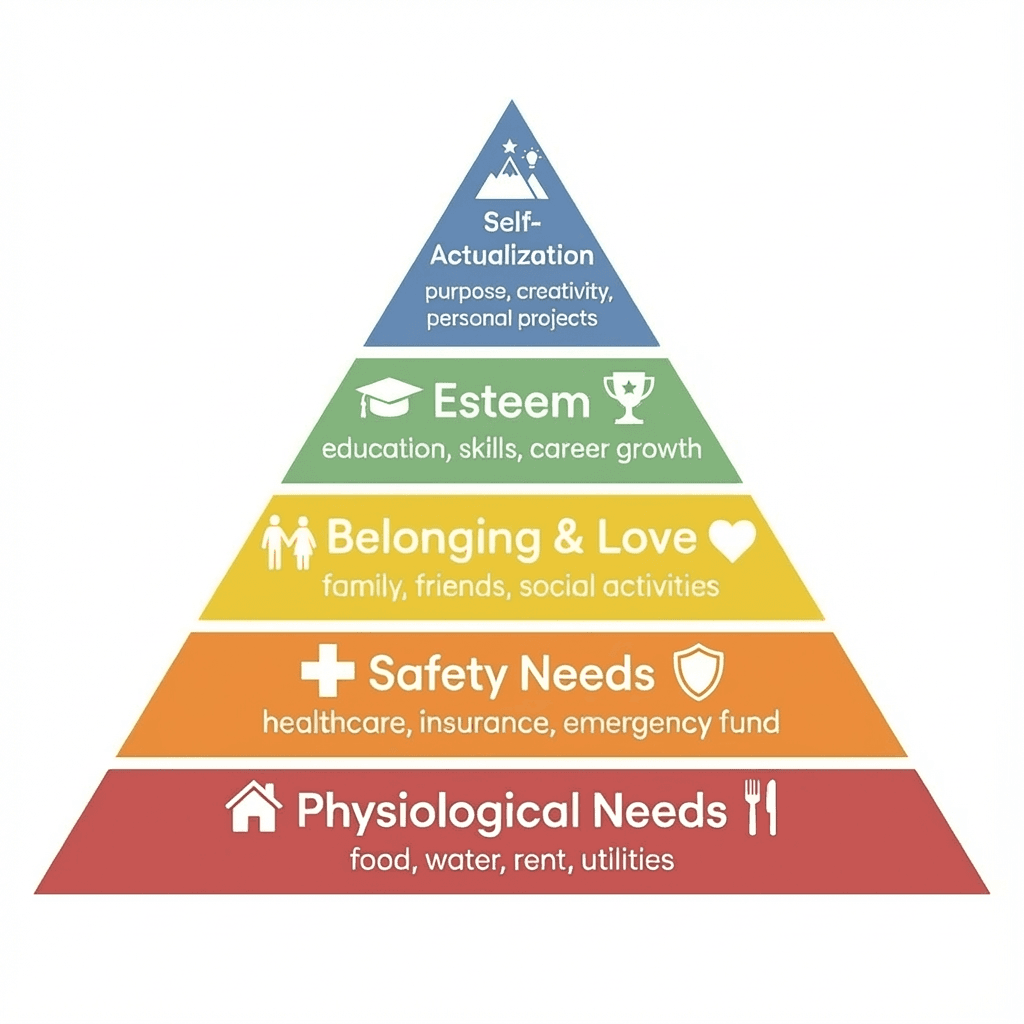
The key is consistency: define “need” as the minimum sustainable level, not the ideal level.
How to build one (practical)
- List your monthly essentials and compute a realistic baseline.
- Compare that baseline to your net income.
- Set a clear cap for wants (and treat savings as a first-class line item if relevant).
- Review once per month and adjust only when your situation changes.
Suggested categories
When building a basic needs budget, it helps to use a small set of categories that cover the foundations. Here’s a practical template:
- Shelter: rent or mortgage/house credit + insurance, utilities, and the minimum for furniture and essentials like electronics.
- Food: groceries and basic meals.
- Clothing: minimum replacement and weather-appropriate basics.
- Health: insurance, medicine, and hygiene tools (the basics that keep you functioning).
- Education: subscriptions and books (minimum that supports learning and skill-building).
- Hobby: basic tools/equipment for the cheapest activities you’re interested in.
- Social: meeting friends/family, plus the minimum transportation budget to make that possible.
Then, keep a separate wants budget for upgrades and optional lifestyle choices—e.g. vacations abroad, or owning a car when bus or train already gets you where you need to go.
Common mistakes
- Labeling “wants” as “needs” because they feel urgent. The purpose of this model is to reduce emotional accounting by having one clear rule: needs are protected, wants are negotiated.
- Always buying the cheapest option. Often, moving from low-end to competent mid-range products produces large, objective improvements: better reliability, improved safety, longer durability, and more predictable baseline performance. Over the mid to long term, competent mid-range products are often more cost-effective: you replace them less often, spend less time dealing with failures, and avoid “hidden costs” that cheap items can create.